
Hillsborough Most Wanted Notices
The Sheriff's Office posts its wanted-person bulletins through official news releases and its social channels. There is no fixed top-ten page with a promised schedule. An older feature showing ten people is history, not a live list. So search the newest agency posts and note each date. A notice goes stale once someone is arrested, surrenders, or the case changes.
A typical HCSO bulletin includes a photo or physical description, the person's name, and the offense behind the notice. Contact instructions for the agency come with it too. The photo stays on the government source; none is rehosted here. These notices reflect public-safety choices by the agency, not its full warrant inventory. Missing from the news feed clears no one.
Hillsborough Wanted Listing Fields
Always read a notice in the context HCSO supplies. A face or a name alone is thin evidence. That is especially true once a post gets copied around the internet. Match the source, the publication date, the physical description, and any status update before drawing conclusions. Terms like "wanted" or "suspect" describe a procedural stage, nothing more.
| Field | What it means |
|---|---|
| Name and photograph | The identity and agency-supplied image in that selected public notice. |
| Alleged offense or warrant | The stated reason law enforcement seeks the person, subject to court change. |
| Physical description | Descriptors used for recognition; verify more than one fact. |
| Last known area | A reported location context, not proof the person remains there. |
| Warning or caution | Agency safety instructions that must be followed. |
| Tip route | The HCSO, tip411, 911, or Crime Stoppers channel named in the release. |
| Post date or update | The key clue for checking whether the notice may still be current. |
A third-party repost can drop an update. It can even attach the wrong photo. Go back to HCSO, and for a Florida wanted record, use the official FDLE Public Access System. If the person has since been booked in Hillsborough County, the county's official arrest and roster lookup shows how to verify that separate event.
Use Hillsborough Wanted Releases
Think of the HCSO news search as a stream of selected releases rather than a fixed roster. Every item is time-sensitive. Old results can linger in search indexes long after their safety value has faded, and social reposts often lose the original date. Never contact the person shown.
- Open HCSO News and locate the agency's original wanted-person release, not a screenshot or repost.
- Read the date, alleged basis, descriptors, caution text, and any later update on the same agency channel.
- Compare more than one identifier. Do not act on a similar name or face alone.
- If there is an immediate threat, call 911. Otherwise use HCSO non-emergency, HCSO Tip, or Crime Stoppers.
- Give the source post, time, place, and observed facts. Do not investigate, follow, or detain anyone.
The HCSO news interface is captured below as the official publication route.
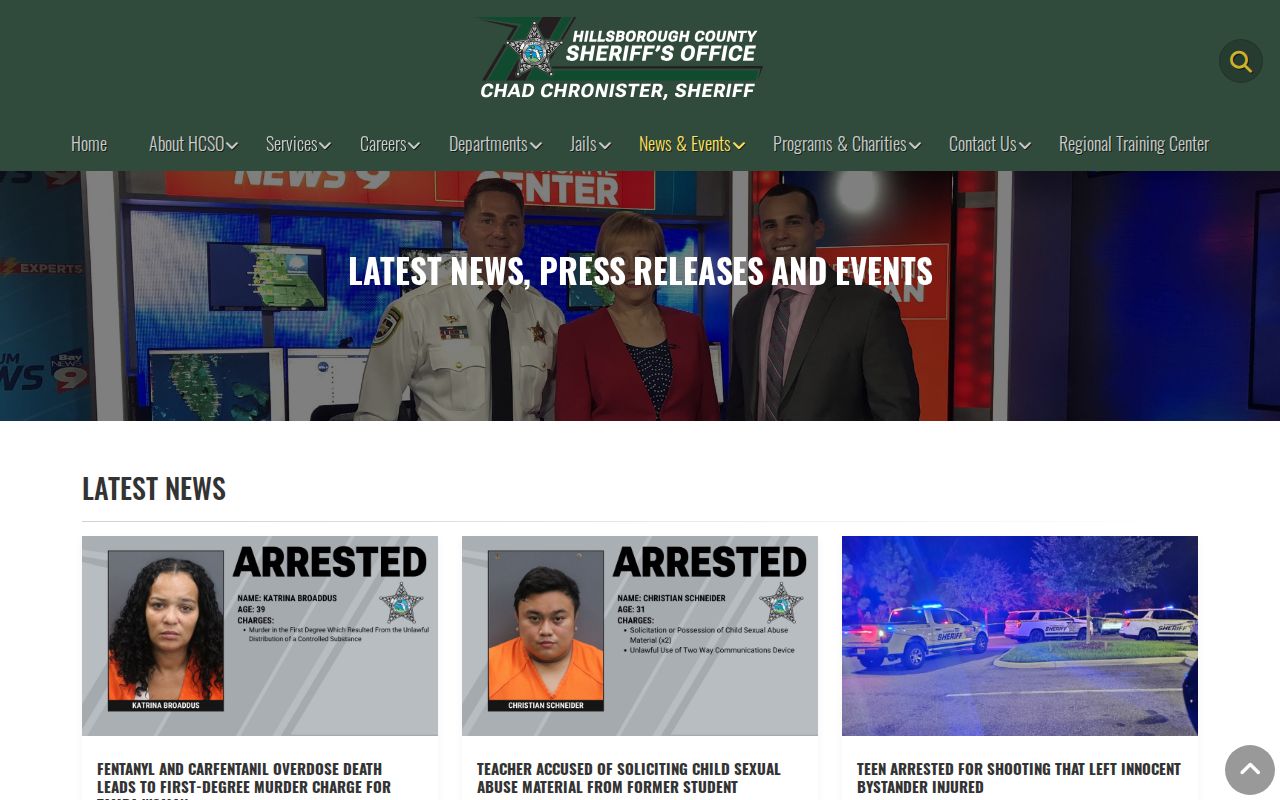
This page simply documents where selected notices appear. It offers no complete or fixed Hillsborough County most wanted count.
Check Hillsborough County Warrants
Looking for a Hillsborough County warrant takes more than scanning a most wanted list. Florida keeps a statewide tool for this. The FDLE Public Access System, known as PAS, is the best free starting point. It shows wanted records from across the state. Agencies choose which entries appear there. The system pulls fresh data from FCIC once a day. Even so, FDLE cautions that more records can exist beyond what PAS displays. An empty result is not a clean bill of health.
- Search FDLE PAS with accurate identifying information and read its public-access limits.
- Confirm any apparent match through HCSO non-emergency at 813-247-8200, the responsible court, or an attorney.
- Use Hillsborough Clerk HOVER to review the case docket and see whether a capias event appears.
- Do not treat the court docket as street-safety clearance. An attorney or court can explain a safe resolution route.
- If the warrant may concern the person searching, arrange the next step through counsel or the court. Do not seek concealment or avoidance tactics.
The official FDLE wanted-record search lays out its limits and safety notices right on the search screen.
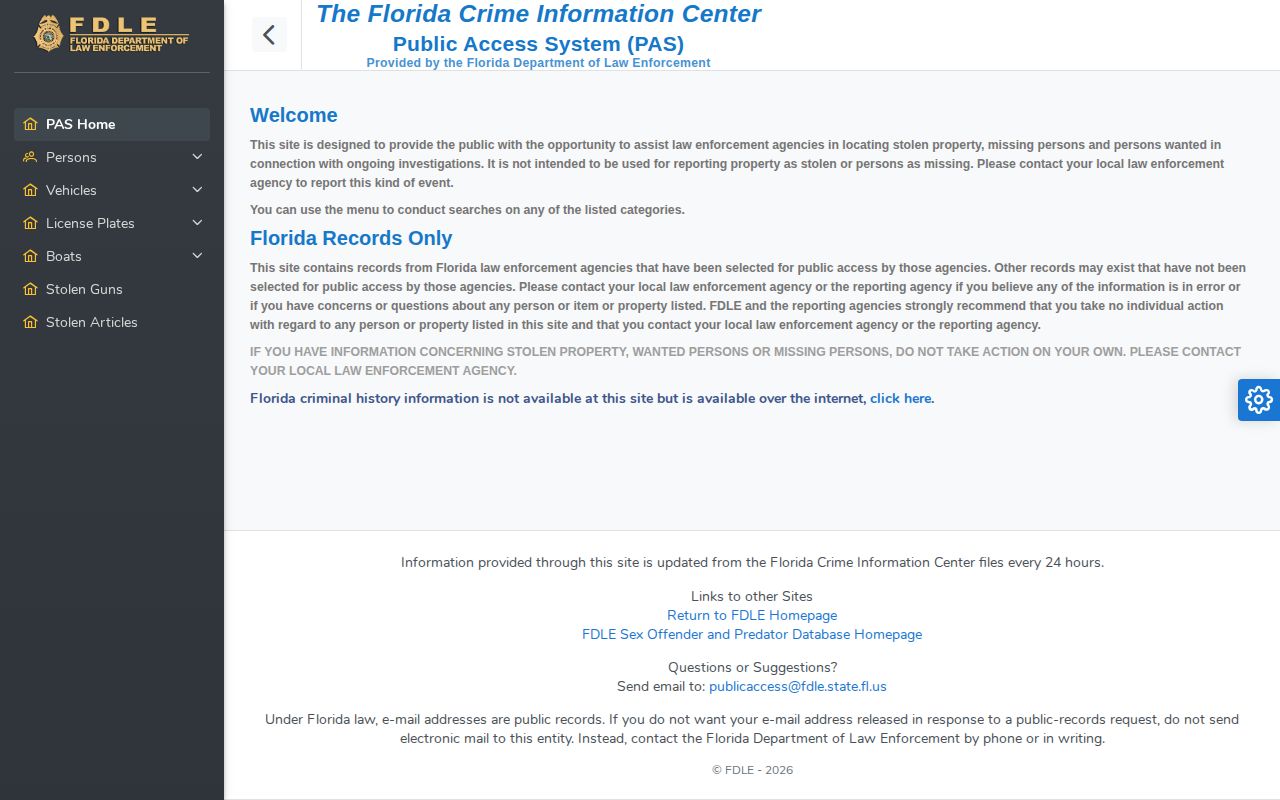
Because PAS is a curated public index refreshed daily, those limits belong in any honest discussion of Hillsborough County warrant checks.
Hillsborough Warrant Terms
Court paperwork comes with its own vocabulary. Arrest warrant, capias, and bench warrant get used almost interchangeably. They are not always the same thing. Only the docket and the issuing court can tell you what a document truly is. A booking entry made after an arrest is a separate record altogether. Labels can mislead, so treat the paper itself as the authority.
| Term | Practical meaning |
|---|---|
| Arrest warrant | A judicial command authorizing arrest based on the stated matter. |
| Capias or bench warrant | A court-issued command that may follow a missed appearance or court event. |
| Most wanted notice | A selected publicity item; it is not a complete warrant database. |
| Booking record | The jail intake event created if a person is arrested and processed. |
| Court disposition | The later outcome, which must be checked separately from the warrant or arrest. |
A docket entry points you to the case behind a warrant. It will not settle the current status. Check with HCSO or the court directly. Records shift, warrants get recalled, and names get mixed up. So if a warrant might carry your name, call a lawyer or the issuing court and plan a lawful resolution first.
The Hillsborough Clerk can walk you through docket access. Staff cannot give legal advice or serve as your personal safety net. A capias in HOVER gives useful case context, yet the public image may lag behind the real order, so verify with the court or with counsel. An HCSO booking record shows the arrest event itself. It does not show whether every linked warrant was cleared. Keep the case, the booking, and the court outcome distinct.
Hillsborough Wanted Tip Channels
For sending tips, HCSO backs a mobile tool called HCSO Tip, built on tip411. It takes anonymous reports by app, web, and text, and it handles photos and video too. The agency says every tip lands in its Communications Center, watched around the clock. It also pushes alerts and official content to users. One thing it is not: an inmate roster. It offers no jail photos.
Hillsborough County Sheriff's OfficeEmergency threat: 911
Non-emergency: 813-247-8200
Anonymous tip411: web or HCSO Tip app
Text: CTYTIP to 847411
Crime Stoppers: 800-873-8477
Crime Stoppers of Tampa Bay sets its own rules on rewards, so never assume cash for every tip. When you report, include hard facts. Give the location, the time, and the notice you saw, if you know it. Skip rumors. Never put yourself at risk chasing a sharper photo.
The HCSO anonymous tip page lists every reporting option the agency supports.
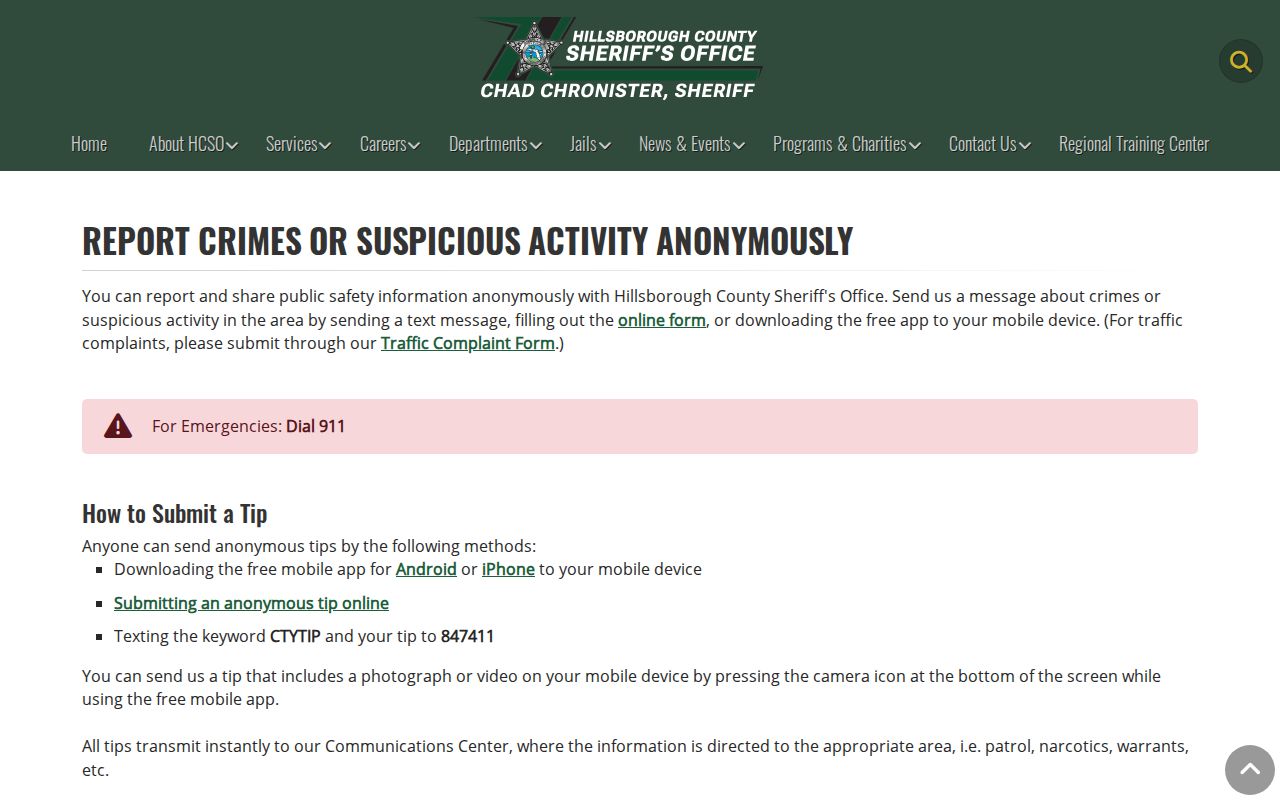
Skip the unofficial apps. To confirm how tips work right now, go straight to the agency's own wanted page for current instructions.
When Hillsborough Wanted Data Updates
Each system moves on its own clock. FDLE PAS refreshes selected public wanted records from FCIC every 24 hours. HCSO says tip411 is watched around the clock, but its wanted releases are event-driven with no verified fixed schedule. Constant tip monitoring does not turn a curated news feed into a full warrant index.
Jail records move faster. HCSO Arrest Inquiry entries can appear within 30 minutes after data enter the Jail Management System, which is not the same as 30 minutes after the street arrest. An old wanted post and a fresh jail booking can sit side by side in search results for a while. Compare dates and official updates, then use HOVER for the filed case and its outcome.
Note: Search engines and social reposts can keep an obsolete wanted notice alive after the agency changes its own page.
Custody alerts are a different product again. VINE and VINELink send notice when a participating agency reports a change. FDLE's Offender Alert System covers registered sexual offenders and predators. Neither one confirms an active Hillsborough warrant, replaces PAS, or makes an HCSO wanted release complete. Court hearing notices track a case event, not warrant status. Match the source to your actual question.
Wanted Does Not Mean Guilty
A wanted notice means law enforcement or a court is looking for someone. It settles nothing about the case itself. Outcomes run a wide range: amended charges, no filing, dismissal, acquittal, withheld adjudication, or conviction. HCSO sends final-outcome questions to the Hillsborough Clerk, since its arrest data may lag behind State Attorney decisions or trial results. HOVER is the official bridge from arrest to docket and disposition.
Identity takes care too. Names repeat, appearances change, and third-party posts can pair an old photo with stale status. Rely on an HCSO or FDLE source, note its date, and leave enforcement to trained officers.
Federal fugitives travel a separate path. The U.S. Marshals Service Middle District of Florida issues selected wanted releases, but those are not the Hillsborough County warrant inventory. A federal case can precede Bureau of Prisons custody, so the BOP locator may return nothing at the arrest stage. Follow that agency's own tip route and the federal court record.
Keep a short audit trail for county matters. Save the official source URL, your search date, the identifiers used, and the office that confirmed status. If a clerk or agency reports no public record, describe that narrow result plainly. It is not proof that no warrant exists. Spelling, protected data, public-access limits, and update timing can all skew a search.